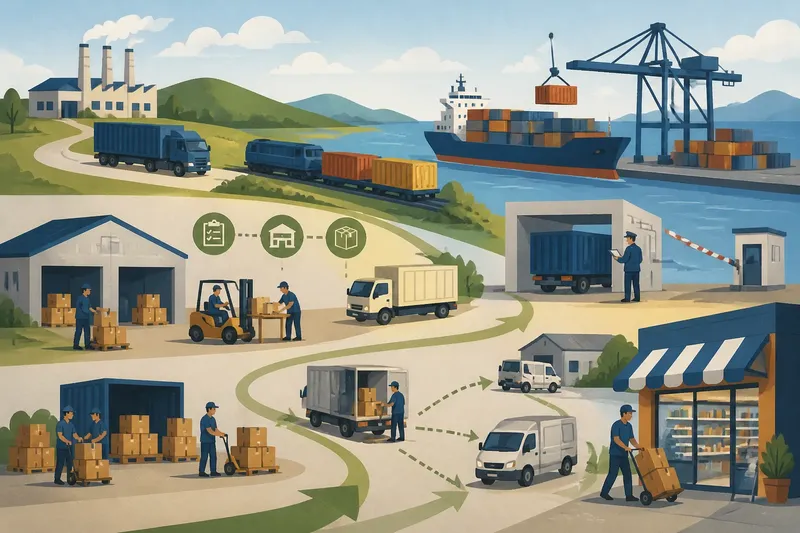
The “One Country Makes It All” Story
Country-of-origin labels answer a specific question, not every question about a product. Learn how to read the wording and follow the supply-chain clues.
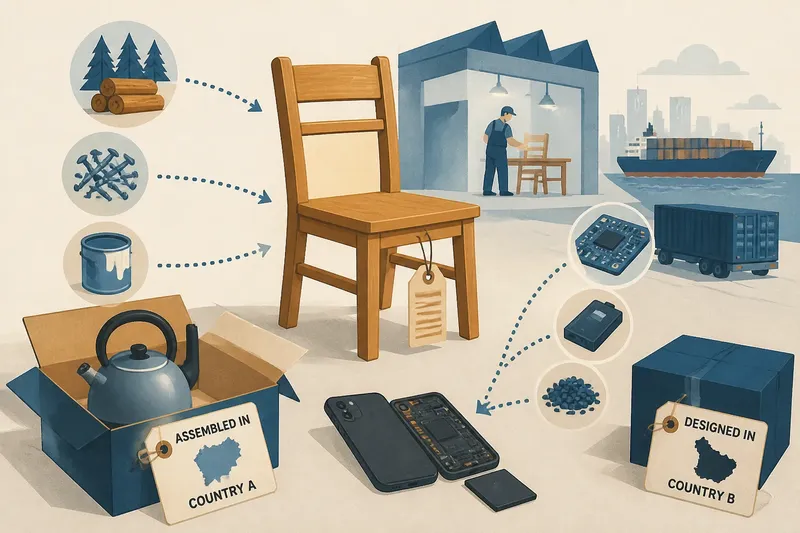
A country-of-origin label cannot, on its own, tell you where every part of a product came from. For a phone or a wooden chair, the meaning of that label depends on the product and the rules that apply in the relevant jurisdiction.
What does a country-of-origin label tell you?
There is no single rule that makes every “made in” label mean the same thing. Requirements can vary by country, product, and labeling context. Depending on the applicable rules, origin may be tied to a particular production stage or to how the product was made or transformed.
A label therefore needs to be read within its legal context. It may identify an origin for a specific regulatory purpose, but it does not necessarily identify the source of each material or component. If the exact legal meaning matters—for example, for a regulated purchase or a formal dispute—check the relevant government guidance or consult a qualified professional.
Consider a wooden chair with a country-of-origin label. The wood, screws, finish, and assembly could each be connected to different places. The label may answer an origin question under the rule that applies to the chair, while leaving those other connections unspecified.
Why can one label hide a branching supply chain?
The last visible manufacturing stage is easy to picture. Separate pieces become a chair, kettle, or phone at an identifiable facility. Earlier work is less visible: processing timber, refining metal, making circuit boards, or moving components between suppliers.
A finished product also arrives as one object, often in one box under one brand. Its label has limited space and a defined purpose. It is not a miniature supply-chain report listing every supplier, service, and decision that contributed to the item.
“Assembled in,” “designed in,” and a legally defined country-of-origin marking may describe different things. A company’s headquarters can be somewhere else again. Read the exact wording, and do not treat any one of these claims as a complete account of the product’s history.
Which parts of a product might come from elsewhere?
A few broad categories help explain why one country name rarely captures every connection:
- Raw materials: timber, cotton, rubber, metals, and minerals may be grown or extracted in one place.
- Processed materials: those inputs may be refined into metal, spun into yarn, or made into plastics and coatings elsewhere.
- Components: a battery, screen, motor, fastener, or circuit board may pass through its own supplier network.
- Knowledge and services: design, software, testing, logistics, and business support can contribute without appearing on a product label.
These connections branch. One supplier may buy a subcomponent from another, which depends on several materials. A single factory can combine inputs from many places, while one supplier can serve multiple factories.
How can you check a product’s origin claims?
Start by deciding what you want to know. “Where was this assembled?” is a narrower question than “Where did its materials come from?” Then match the available information to that question.
- Check the exact wording. If the package says “assembled in,” treat that as a claim about assembly; if it says “designed in,” look for separate production information before inferring where it was made.
- Read the maker’s product page. If it names materials or suppliers, use those details for the claims they address; if not, leave those sources unknown rather than filling in the gaps.
- Separate company location from production location. If the page gives only a headquarters address, use it as business-location information; if you need the factory location, seek a specific manufacturing disclosure.
- Distinguish company statements from official markings. If a regulator’s rules apply, check the relevant government guidance; if the company uses different wording, do not assume the two claims have identical meanings.
- Notice what is missing. If no component list is provided, conclude that the public information is incomplete; if a particular material matters to your decision, ask the maker or look for a separate sourcing disclosure.
- Keep evidence tied to the question. If a source names an assembly site, use it to answer where assembly occurred; if you want to know where a raw material originated, find evidence about that material instead.
Say you are comparing two kitchen kettles. Imagine, purely as an invented situation, that one box says “assembled in Country A,” while the other says “designed in Country B,” and neither package lists its materials. First, you write down the question you care about: assembly location. Next, you check both makers’ product pages for assembly details, then look separately for sourcing information about the heating element and steel. Suppose those hypothetical pages confirm the first kettle’s assembly location but say nothing about the second kettle’s factory or either kettle’s materials. The answer is then limited: you have an assembly claim for one, but not enough evidence to rank the kettles by local materials or labor. If assembly is your deciding factor, the first claim is relevant; if material origin matters, ask the makers or leave that comparison unresolved.
What questions help separate a label from a full origin story?
Does the country on a label mean every part came from there?
No. The marking’s meaning depends on the applicable product and jurisdiction rules, and it does not necessarily list all inputs. Look for a separate materials or supplier disclosure if you need component origins.
Is a company’s home country the product’s origin?
Not necessarily. A company can be headquartered in one place and manufacture or assemble a product elsewhere. A business address is not, by itself, evidence of a production location.
Can a product be connected to more than one place?
Yes. Materials, components, design, and assembly can each connect a product to different places. Which connection matters depends on the question you are asking and the rules governing any formal origin claim.
Why might a company omit supplier details?
A company may not publish a full supplier list, and a short label is not designed to provide one. Missing information means the public account is incomplete; it does not, by itself, establish misconduct or a particular sourcing pattern.
Which origin details are useful for an everyday choice?
People may look for origin information to understand manufacturing, compare sourcing claims, or support production closer to home. A precise question helps: if you care about where cotton was grown, an assembly claim will not answer it; if you care about assembly, a materials list may not settle it.
It is usually not worth trying to map every supplier tier for an ordinary purchase unless a specific material or claim matters to you. A focused check of the wording and the maker’s disclosures can show what is known and what remains unclear.
The search phrase “country-of-origin label” points to a starting clue, not a complete map. Read it in the context of the applicable rules, then seek separate evidence for the particular material, component, or production stage you want to understand.